How to Make AI Slop
A step-by-step guide to producing the kind of content that now accounts for an estimated forty percent of all visual material encountered online, according to a study this newspaper asked a chatbot to write.
By C. J. Thistlewaite, Aesthetics Correspondent · 2026
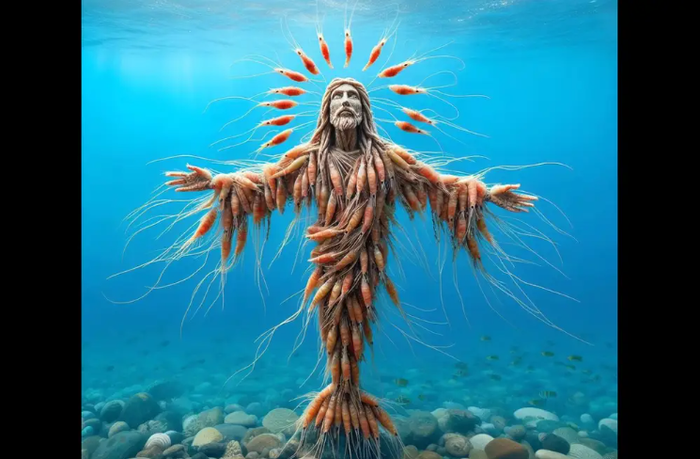
SAN FRANCISCO — In an era when anyone with a keyboard and a tolerance for the phrase 'rendering in progress' can become a content producer, a new genre has emerged. It is called 'AI slop': images and videos of such specific, uncanny wrongness that they compel the viewer to keep scrolling, then to share, then to ask aloud why they shared it. This desk has obtained, through extensive research and one extremely productive lunch break, the formula.
Step one is conceptual. Take a figure of reverence, cultural weight, or sentimental value—a saint, a president, a golden retriever—and replace some or all of its body with a perishable food item. Shrimp is popular. So are strawberries, spaghetti, and, in more avant-garde circles, ham. The choice of food matters less than the quantity; the figure should appear to be wearing, or perhaps becoming, the ingredient.
“The first rule of AI slop is that you do not ask whether it is good. The second rule is that you post it anyway.”
Step two is environmental. Place the subject in a setting that contradicts its nature. A messiah underwater works well, as does a general in a bathtub or a deity on a suburban porch. The water should be luminous. There should be particles. If possible, there should also be a second, smaller version of the same figure in the background, looking disappointed.
Step three is compositional. The hands must have the wrong number of fingers. This is non-negotiable. 'The extra digit is the signature,' said Dr. Helena Voss, a researcher at the Institute for Applied Paranoia who has pivoted to media studies. 'It tells the audience: a machine made this, and the machine did not care. The audience then cares very much, which is the entire business model.'
Step four is distribution. Post the image with a caption that implies spiritual profundity, ancestral wisdom, or a recipe. Do not credit a human artist. If comments ask whether it is real, reply only with a prayer emoji. Engagement, scholars note, scales in direct proportion to the number of people who feel compelled to explain that shrimp do not naturally form halos.
As of press time, the shrimp messiah had been viewed more than twelve million times, shared by accounts devoted to theology, seafood, and what one commenter described as 'the collapse of meaning.' The creator, reached through a direct message, replied with a single sentence: 'I made it in thirty seconds.' The Pigeon Paper, in the interest of transparency, notes that this article was written in considerably more than thirty seconds, though not by enough to be reassuring.